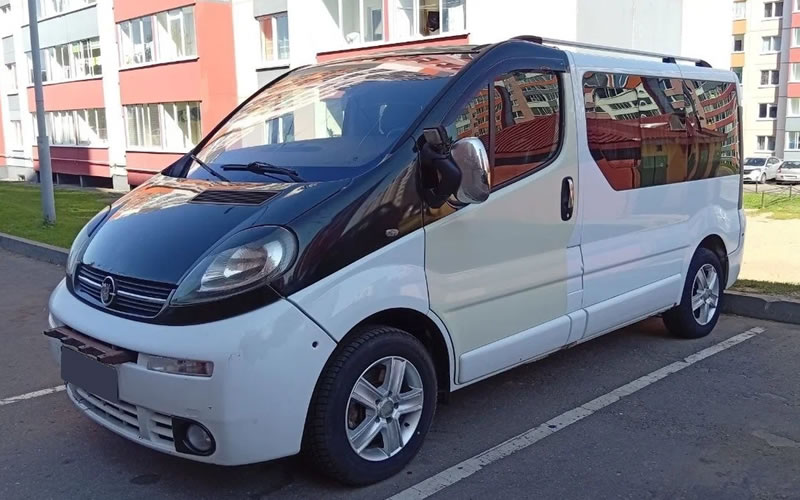
The Opel Vivaro A, a light commercial vehicle (LCV) produced from 2001 to 2014, represents a significant product of a strategic joint venture between General Motors and the Renault-Nissan Alliance. Marketed also as the Renault Trafic II and the Nissan Primastar, this model was designed to compete in the highly contested mid-size van segment. This article provides a systematic analysis of the Vivaro A’s technical architecture, key performance characteristics, its position within the competitive landscape, and a foundational overview of its maintenance and repair protocols.
1. Introduction
The Opel Vivaro A (chassis code X82) was developed as a successor to the Opel Arena. Its design and manufacturing were the result of a collaboration with Renault, with all vehicles being produced at the GM Manufacturing plant in Luton, UK. The primary design objectives were to achieve a optimal balance between payload capacity, fuel efficiency, driver ergonomics, and overall cost-effectiveness for commercial operators. This analysis deconstructs the vehicle’s engineering to elucidate its operational parameters and service lifecycle.
2. Technical Architecture and Design Principles
The Vivaro A is based on a front-engine, front-wheel-drive platform, utilizing a monocoque body construction with a reinforced floor and a robust rear axle to handle significant payloads.
- Platform and Body: The vehicle shares its core platform and many components with the Renault Trafic II and Nissan Primastar. The bodyshell is designed with a high roofline and sliding side doors for optimal cargo accessibility. The payload area features a flat floor and reinforced side panels.
- Suspension System: The suspension configuration was selected to balance load-bearing capacity with ride comfort.
- Front: Independent MacPherson struts with coil springs and an anti-roll bar.
- Rear: A rigid, leaf-spring dependent suspension system, engineered for high durability and variable load management.
- Electronics and Safety: The vehicle employed a conventional electrical architecture for its era. Standard safety features included dual front airbags and anti-lock braking system (ABS). Electronic Stability Program (ESP) was available as an option on later models.
3. Technical Specifications and Powertrain Configurations
The Vivaro A was offered with a range of diesel engines, which were the primary choice for the commercial market, alongside a less common gasoline option.
- Diesel Engines: The most prevalent powerplants were the 2.0-liter and 2.5-liter turbocharged diesel units (engine codes Z20DTH, G9U, etc.).
- Power outputs ranged from approximately 90 hp to 150 hp.
- These common-rail injection engines were developed with a focus on low-end torque and operational economy.
- Transmission Systems:
- Standard 6-speed manual transmission.
- A 6-speed automated manual transmission (Easytronic) was available as an option on certain variants.
- Dimensional and Capacity Data:
- Gross Vehicle Weight (GVWR): Ranged from 2.5 to 3.1 tonnes.
- Payload Capacity: Typically between 1,000 and 1,200 kg, dependent on configuration.
- Cargo Volume: Varied from approximately 5.2 to 8.6 cubic meters across standard and long-wheelbase models.
4. Competitive Landscape Analysis
Within the European mid-size LCV segment, the Opel Vivaro A competed against several established and capable rivals.
- Ford Transit Custom: A segment benchmark, praised for its driving dynamics, powerful engine range, and strong aftermarket support.
- Volkswagen Transporter (T5): Positioned as a premium offering, known for its high build quality, refined interiors, and strong resale value.
- Fiat Ducato / Citroën Jumper / Peugeot Boxer: These larger vans offered superior cargo volume and payload, competing at the upper end of the Vivaro’s capacity range.
- Mercedes-Benz Vito (W639): Another key competitor, offering a reputation for durability and a range of powerful diesel engines.
The Vivaro A’s primary competitive advantages were its car-like driving position, competitive pricing, and the widespread availability of parts due to its shared platform. Its main criticisms often centered around the reliability of certain engine components compared to some rivals.
5. Maintenance and Repair: Protocol Overview
Adherence to prescribed maintenance intervals is critical for the operational longevity and reliability of the Vivaro A, particularly given its commercial application.
- Engine Oil and Filter Service:
- Interval: Strictly every 15,000 to 20,000 km or 12 months, with a reduced interval for severe operating conditions (frequent short trips, high dust environments).
- Specification: Requires low-ash, ACEA-grade engine oil. The use of incorrect oil specifications can lead to premature failure of the turbocharger and the Diesel Particulate Filter (DPF) on Euro 4 and later models.
- Critical Service Items:
- Timing Belt Replacement: This is a non-negotiable, high-priority service item. The interference engine design means belt failure results in catastrophic internal damage. Replacement is mandated every 60,000 to 100,000 miles (or 5-6 years).
- Diesel Particulate Filter (DPF) Regeneration: Vehicles equipped with a DPF require periodic active regeneration cycles. Consistent short-trip driving prevents this process, leading to clogging and expensive forced regeneration or replacement.
- EGR System: The Exhaust Gas Recirculation valve and cooler are known to be prone to carbon buildup, leading to reduced performance, increased emissions, and rough idling. Regular inspection and cleaning are advised.
- Common Wear Items and Diagnostics:
- Turbocharger Actuator: The electronic actuator on the turbocharger is a common failure point, often manifesting as reduced power and diagnostic trouble codes related to boost pressure.
- Dual-Mass Flywheel (DMF): On high-mileage examples, failure of the DMF is common, indicated by rattling noises at idle and during gear changes.
- Suspension and Brakes: Front lower control arm bushings and rear leaf spring shackles are subject to wear and require inspection. The vehicle’s mass necessitates regular monitoring of brake pad and disc thickness.
6. Conclusion
The Opel Vivaro A is a vehicle of significant commercial importance, whose design was shaped by the economic and practical demands of the LCV market. Its shared-platform strategy resulted in competitive pricing and parts commonality, while its engineering provided a functional and ergonomic workspace. However, its long-term reliability is heavily dependent on a rigorous and preventative maintenance regimen, with particular emphasis on the timing belt, EGR system, and DPF management. For fleet operators and private owners, a data-driven approach to servicing, informed by technical documentation, is essential for minimizing downtime and total cost of ownership.


 Adblock